quantum mechanics is the body of scientific principles that explains the behavior of matter and its interactions with energy on the scale of atoms and atomic particles.
Classical physics explains matter and energy at the macroscopic level of the scale familiar to human experience, including the behavior of astronomical bodies. It remains the key to measurement for much of modern science and technology; but at the end of the 19th Century observers discovered phenomena in both the large (macro) and the small (micro) worlds that classical physics could not explain.[1] Coming to terms with these limitations led to the development of quantum mechanics, a major revolution in physics. This article describes how physicists discovered the limitations of classical physics and developed the main concepts of the quantum theory that replaced them in the early decades of the 20th century.[note 1] These concepts are described in roughly the order they were first discovered; for a more complete history of the subject, see History of quantum mechanics.
Some aspects of quantum mechanics can seem counter-intuitive, because they describe behavior quite different than that seen at larger length scales, where classical physics is an excellent approximation. In the words of Richard Feynman, quantum mechanics deals with "nature as she is — absurd."[2]
Many types of energy, such as photons (discrete units of light), behave in some respects like particles and in other respects like waves. Radiators of photons (such as neon lights) have emission spectra that are discontinuous, in that only certain frequencies of light are present. Quantum mechanics predicts the energies, the colours, and the spectral intensities of all forms of electromagnetic radiation.
But quantum mechanics theory ordains that the more closely one pins down one measure (such as the position of a particle), the less precise another measurement pertaining to the same particle (such as its momentum) must become. Put another way, measuring position first and then measuring momentum does not have the same outcome as measuring momentum first and then measuring position; the act of measuring the first property necessarily introduces additional energy into the micro-system being studied, thereby perturbing that system.
Even more disconcerting, pairs of particles can be created as entangled twins — which means that a measurement which pins down one property of one of the particles will instantaneously pin down the same or another property of its entangled twin, regardless of the distance separating them — though this may be regarded as merely a mathematical anomaly, rather than a real one.(wikipedia.com) SILAHKAN KLIK DOWNLOAD DISINI
Tampilkan postingan dengan label FISIKA KUANTUM. Tampilkan semua postingan
Sabtu, 26 Mei 2012
a-guide-to-physics-problems.pdf
Buku ini terdiri dari 374 halaman. Materi yang dibahas terdiri dari Termodinamika, Fisika Statistik, dan Mekanika Kuantum. Buku ini bagus sebagai dasar untuk mata kuliah menengah dan lanjut di jurusan fisika
SILAHKAN KLIK DOWNLOAD DISINI
quantum-physics-a-beginners-guide.pdf
Mysterious talk of quarks, spin and cats in boxes has given quantum physics a reputation as the scientific theory that no one really understands. Yet, as highly respected science writer Alastair Rae explains in this fascinating introduction to the quantum world, the practical applications of quantum physics are all around us in everyday life. Were it not for quantum physics, computers would not function, kettles would not boil, and power stations would not heat our homes. With a minimum of mathematics and an abundance of common sense, Rae offers a step-by-step guide to the basics of one of the most important theories of all time." Concluding with a tantalising insight into the philosophical problems, pitfalls and revolutionary potential of the new physics, this guide will provide the perfect introduction to quantum theory for readers of all backgrounds.
SILAHKAN KLIK DOWNLOAD DISINI
quantum-mechanics-modern-development.pdf
Pengenalan kuantum
Era Quantum Mechanical dimulai pada 1900 ketika Max Planck mendalilkan bahwa segala sesuatu terdiri dari bit kecil yang disebut kuanta (satu kuantum, dua kuanta). Cetakan memiliki quanta, tetapi juga kekuatan-kekuatan yang membuat benda-benda bersama. Pasukan hanya bisa datang dalam langkah-langkah kecil pada saat itu; tidak ada lagi yang namanya jauh lebih kecil.Salah satu kendala terberat penjelajah awal Quantum Mekanika harus diatasi adalah keyakinan mereka sendiri dalam determinisme. Karena dunia orang kecil sangat berbeda, orang harus hampir memformat ulang sistem logika yang telah membawa mereka sejauh ini. Untuk memahami alam mereka harus melepaskan intuisi mereka dan merangkul cara yang sama sekali baru dalam berpikir. Hal-hal di mana mereka menemukan aturan mendasar yang hanya itu dan tidak bisa benar-benar dijelaskan dalam hal dunia skala besar. Sama seperti air yang basah dan api adalah panas, partikel kuantum menampilkan perilaku yang melekat kepada mereka sendiri dan tidak bisa dibandingkan dengan objek material yang kita dapat mengamati dengan mata telanjang.
Salah satu aturan dasar adalah bahwa segala sesuatu terdiri dari bit kecil. Obyek material terdiri dari partikel, tetapi juga kekuatan yang menjaga benda-benda bersama. Light, misalnya, adalah selain hal-hal cerah yang membuat semuanya terlihat, juga kekuatan (gaya elektromagnetik disebut) yang membuat elektron terikat pada inti atom, dan atom terikat bersama-sama untuk membuat molekul dan akhirnya objek. Dalam Alkitab Yesus sering disebut sebagai cahaya, dan penafsir yang paling fokus pada nilai metafora dari laporan. Tetapi karena kita menyadari bahwa segala bentuk materi berada di 'dipadatkan' cahaya fakta (energi, seperti dalam E = mc 2) dan gaya elektromagnetik memegang semua atom bersama-sama, nilai harfiah dari pernyataan Paulus "dan Dia ada sebelum segala sesuatu, dan kepada-Nya segala sesuatu ada (Kol 1:17) "menjadi sangat menarik.
Partikel yang baik apa yang disebut partikel nyata, juga dikenal sebagai fermion, atau mereka adalahkekuatan partikel, juga dikenal sebagai boson.
Quark, yang fermion, terikat bersama oleh gluon, yang boson. Quark dan gluon membentuk nulceons, dan nukleon terikat bersama oleh gluon membentuk inti atom.
Elektron, yang fermion, terikat ke inti oleh foton, yang boson. Para shebang keseluruhan bersama-sama membentuk atom. Atom membentuk molekul. Molekul membentuk objek.
Segala sesuatu yang kita lihat, dari bintang-bintang yang paling jauh dengan gadis sebelah, atau komputer ini Anda menatap dan diri Anda sendiri juga terdiri dari 3 fermion belaka dan 9 boson. The 3 fermion adalah Up-quark, Bawah-quark dan elektron. The 9 adalah boson 8 gluon dan 1 foton. nah buku ini akan membantu teman teman mempelajari lagi tentang apa itu kuantum mekanik
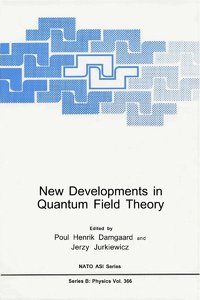
new-developments-in-quantum-field-theory.pdf
New Developments in Quantum Field Theory
Jerzy Jurkiewicz, Poul Henrik Damgaard
Type: eBook
Released: 1998
Publisher: Springer
Page Count: 375
Format: pdf
Language: English
ISBN-10: 0306458160
ISBN-13: 9780306458163
.New Developments in Quantum ... Textbook ...
SILAHKAN KLIK DOWNLOAD DISINI
Introduction-to-quantum-theory-and-atomic-structure.pdf
Quantum mechanics is the body of scientific principles that explains the behavior of matter and its interactions with energy on the scale of atoms and atomic particles.
Classical physics explains matter and energy at the macroscopic level of the scale familiar to human experience, including the behavior of astronomical bodies. It remains the key tomeasurement for much of modern science and technology; but at the end of the 19th Century observers discovered phenomena in both the large (macro) and the small (micro) worlds that classical physics could not explain. Coming to terms with these limitations led to the development of quantum mechanics, a major revolution in physics. This article describes how physicists discovered the limitations of classical physics and developed the main concepts of the quantum theory that replaced them in the early decades of the 20th century. These concepts are described in roughly the order they were first discovered; for a more complete history of the subject, see History of quantum mechanics.
Some aspects of quantum mechanics can seem counter-intuitive, because they describe behavior quite different than that seen at larger length scales, where classical physics is an excellent approximation. In the words of Richard Feynman, quantum mechanics deals with "nature as she is — absurd."
Many types of energy, such as photons (discrete units of light), behave in some respects like particles and in other respects like waves. Radiators of photons (such as neon lights) have emission spectra that are discontinuous, in that only certain frequencies of light are present. Quantum mechanics predicts the energies, the colours, and the spectral intensities of all forms ofelectromagnetic radiation.
But quantum mechanics theory ordains that the more closely one pins down one measure (such as the position of a particle), the less precise another measurement pertaining to the same particle (such as its momentum) must become. Put another way, measuring position first and then measuring momentum does not have the same outcome as measuring momentum first and then measuring position; the act of measuring the first property necessarily introduces additional energy into the micro-system being studied, thereby perturbing that system.
Even more disconcerting, pairs of particles can be created as entangled twins — which means that a measurement which pins down one property of one of the particles will instantaneously pin down the same or another property of its entangled twin, regardless of the distance separating them — though this may be regarded as merely a mathematical anomaly, rather than a real one(WIKIPEDIA.COM).
SILAHKAN KLIK DOWNLOAD DISINI
Langganan:
Postingan (Atom)